Driven by four distinct Use Cases across diverse forest ecosystems in Europe, Forest DTC will deliver a pre-operational, end-to-end system for implementation, validation and demonstration.
The Use Cases are as follows:
- Czechia – Bark beetle phenology modelling and growth model validation with dendrometer plots
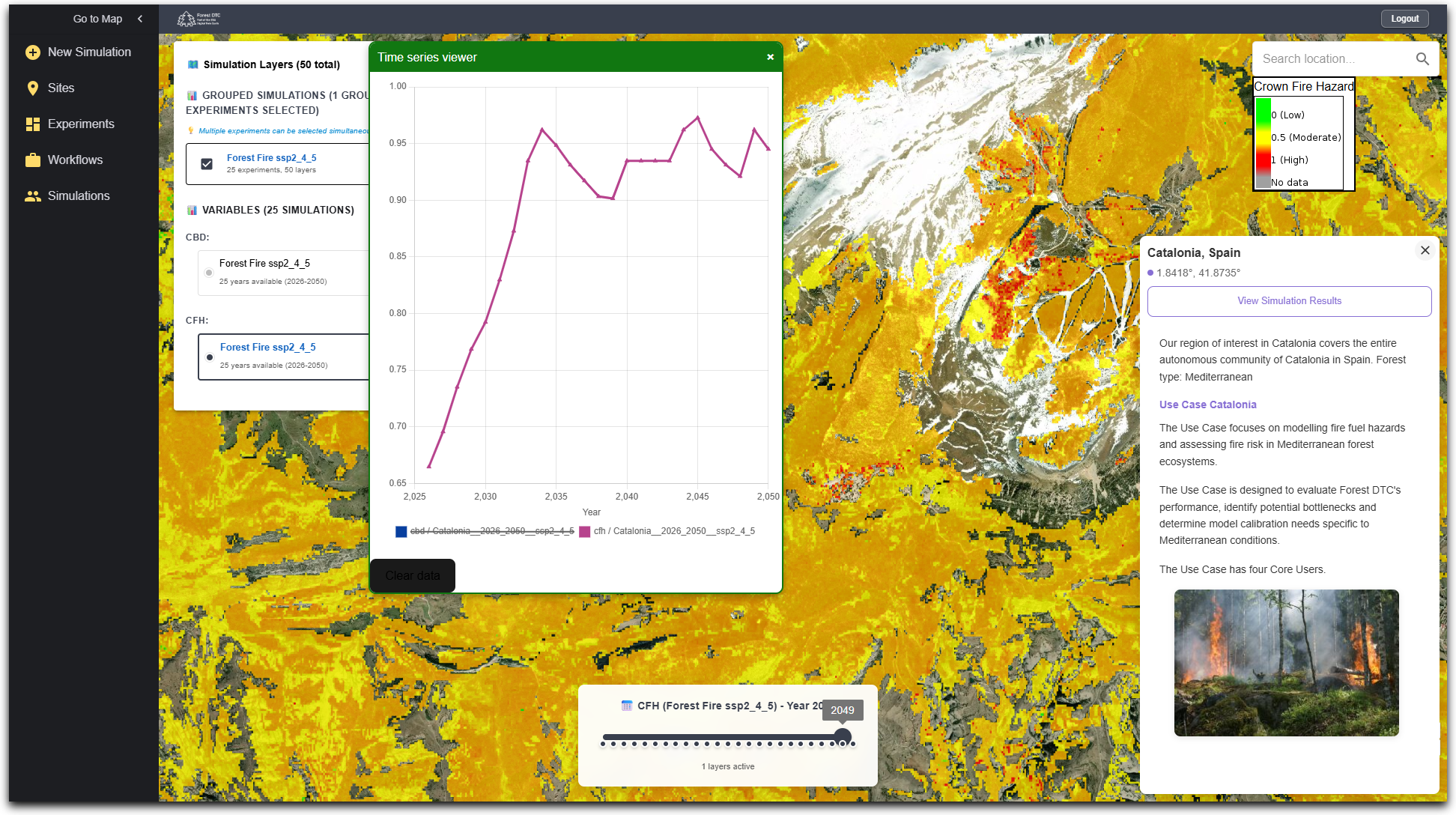
- Catalonia – Fire risk modelling
- Finland – Forest management pathways and old-growth forests
- Science – Diverse forest types, experimental modelling techniques and data sources
Why were these Use Cases selected?
The four Use Cases were selected to cover diverse geographic areas in order to demonstrate performance under varying conditions and assess scalability. The first three Use Cases are intended for a broader stakeholder audience. While they are scientifically relevant in terms of forest disturbance modelling and carbon balance studies, they do not directly advance forest modelling research. To address this, we propose the Science Use Case to broaden the range of modelling techniques and data sources within Forest DTC.
Moreover, the Use Cases are designed and implemented to meet the specific needs of Forest DTC’s Core Users. These users provided detailed input for their corresponding Use Case, including areas of interest, input data they can supply and requirements for output products. Conclusions drawn from these inputs have been incorporated into the Use Case specifications and are guiding the execution of Use Case experiments.
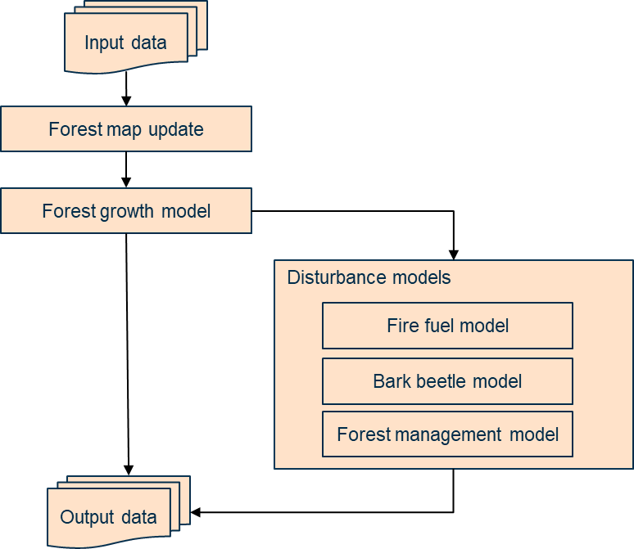
Forest DTC implementation
Forest map update
- In the Forest DTC’s map update module, EO data is used to update the available maps to the starting point of simulations.
- The current method is based on computing a change index between growth model outputs and Sentinel‑2 image bands.
- Changed pixels are identified using this index, and for those pixels new values are computed using the k‑nearest neighbours method.
Forest growth models
- In Forest DTC, our goal is to quantify how carbon balance and forest growth are influenced by different management and climatic scenarios.
- To achieve this, we consider simple process-based models to be the most effective tools.
- We will use two such models widely applied across Europe: PREBASSO and 3PGmix
- These models have been parameterised for numerous species and successfully applied under diverse environmental conditions.
Disturbance models
Input data
The Forest DTC submodels utilise inputs from the following categories:
- Forest structural variables
- Climate (weather) data
- Site data
Key inputs from these categories are listed below, together with the models where they are applied.
List of the key inputs
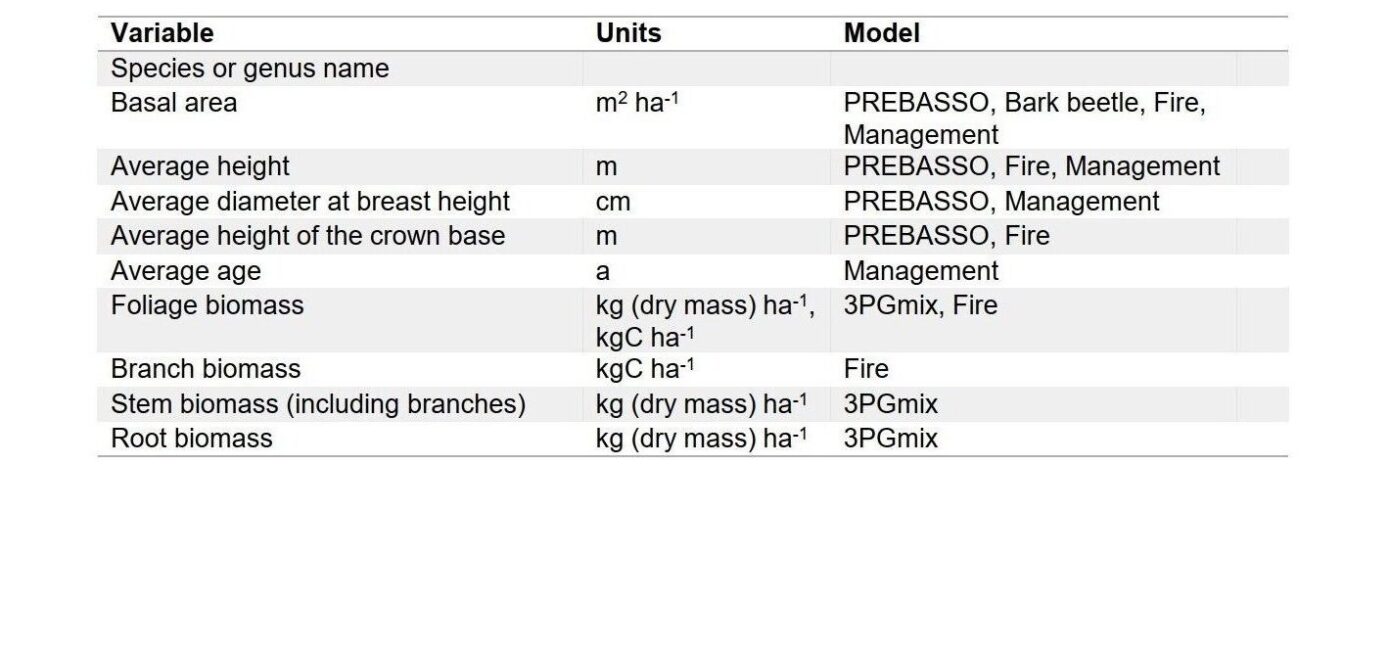
Forest structural variables
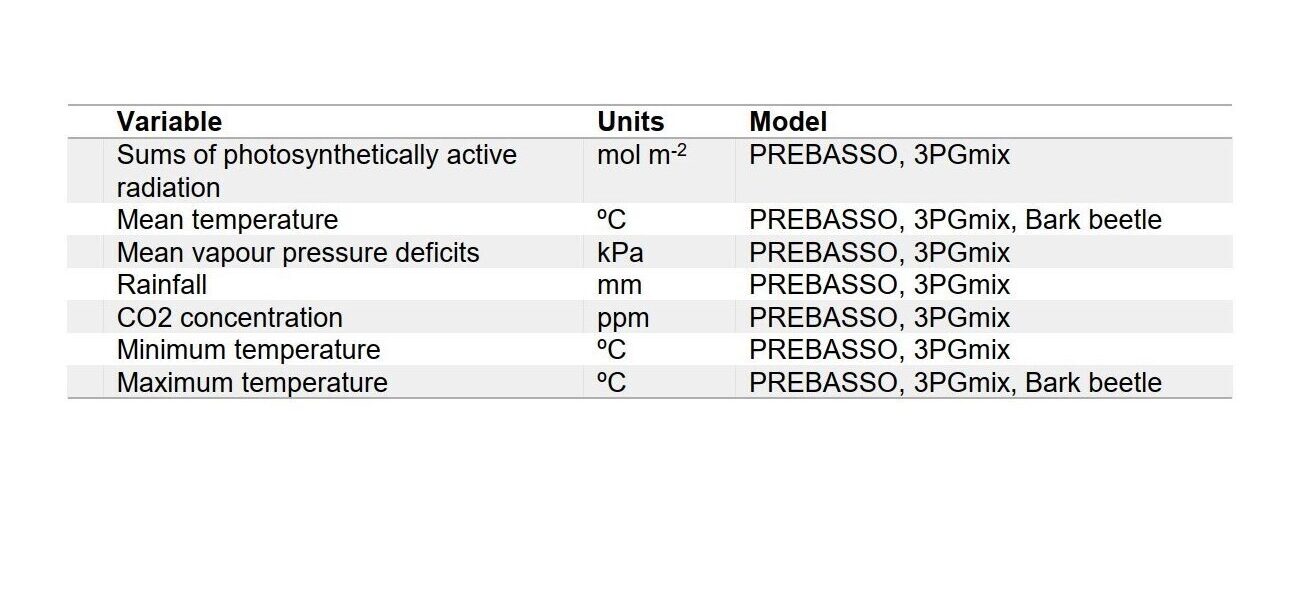
Climate (weather) data
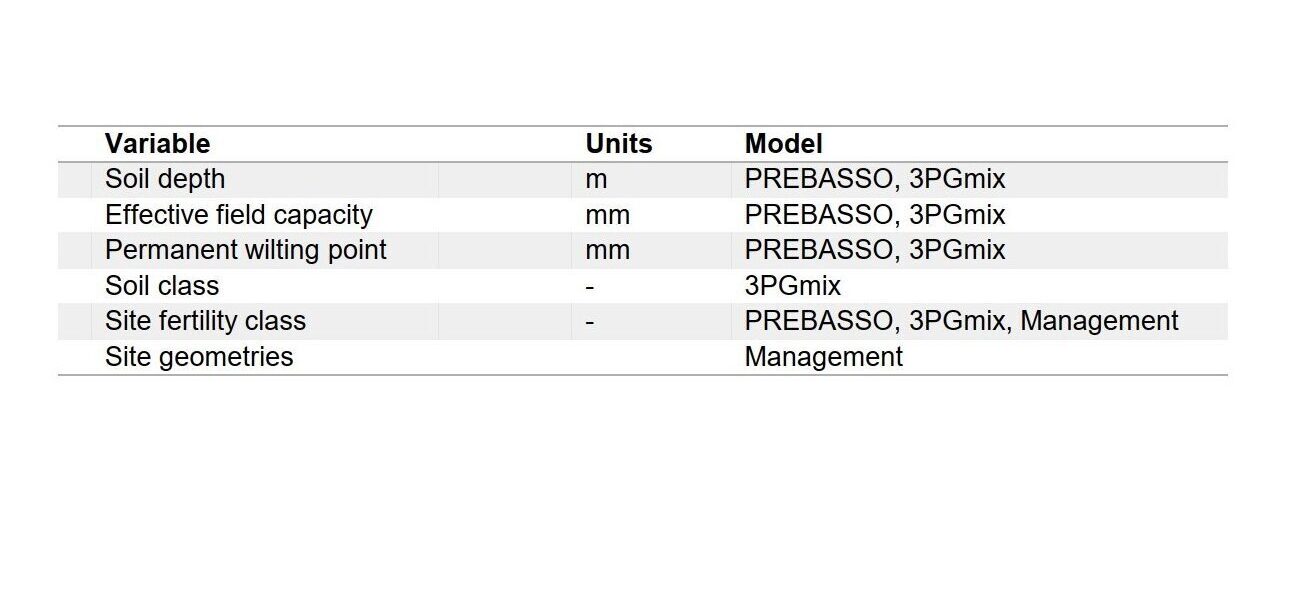
Site data
Output data
Disturbance maps
- Simulated management operations
- Yearly bark beetle risk maps
- Yearly fire risk maps
Yearly forest variable maps
- Tree species
- Stem volume (m3/ha)
- Stem basal area (m2/ha)
- Tree height (m)
- Stem diameter (cm)
Yearly carbon and productivity maps
- Aboveground wood biomass (t/ha)
- Belowground biomass (t/ha)
- Carbon in woody biomass (tCO2eq/ha)
- Gross primary production (tCO2eq/ha/a)
- Evapotranspiration (mm/a)
- Net primary production (tCO2eq/ha/a)
- Annual stem volume increment (m3/ha/a)